
This was in 2002. I woke up at 10 am on a Sunday, still far away, untouched by the evening Monday Blues. I walk up to the kitchen to hear an announcement from my mother-chef asking me to go outside to buy a very ‘luxurious’ ingredient that was frankly forbidden on regular weekdays and was plain weird to cook without any particular reason. I grab money, rush outside, ask the price, collect the bag, and hurry back home to see that I have broken 2 out of 6 of them. I look up in terror, expecting a devil’s eyebrow staring at me, but instead I hear,
“Don’t worry, child, I’ll just scramble them.”
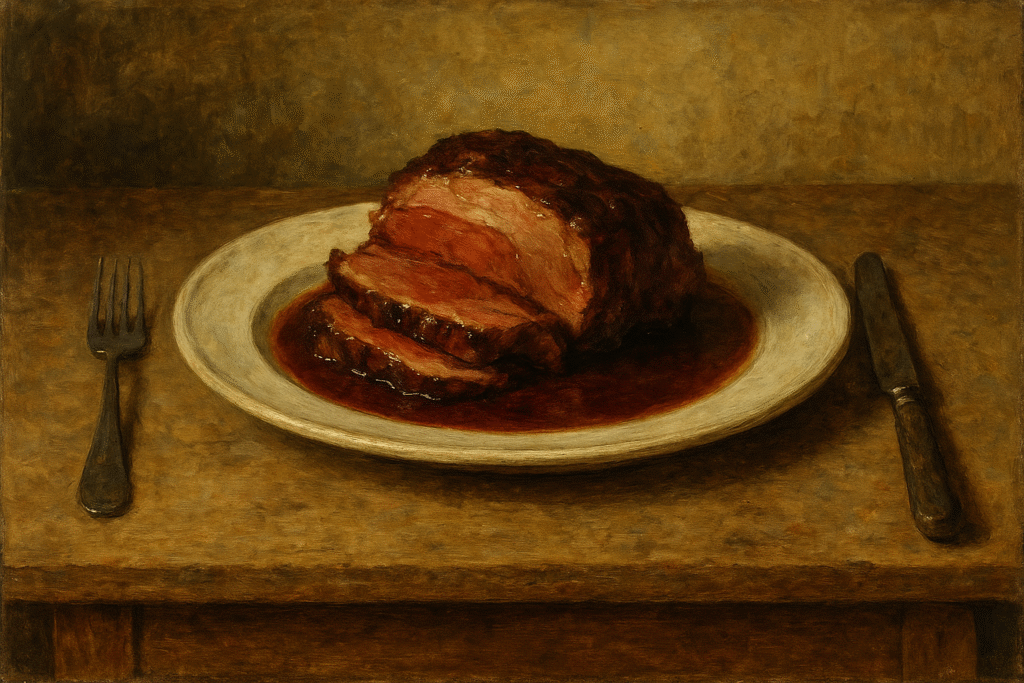
That intro was a bit of a misdirect. But we are on the right track. Eggs were a “luxury” to eat in my house when growing up. Emphasis on the quotations because they weren’t a luxury, because we couldn’t afford them regularly. It was just commonly believed that meat and animal products like eggs were reserved only for Sundays in Indian households. This is not true for everyone as well, depending on where you grew up, your religious inclinations, preferences, or your scale of ‘wokeness’, meat consumption has always fluctuated between person to person.
Now, again, don’t try to find factual information on this blog. It’s all just observations and opinions. Like, how much the price of Paneer (a very common Indian cheese often used as a substitute for meat) now costs twice as much per kilo as chicken (most consumed meat around the world). Also, we are a vegetarian country, yet we are also one of the largest exporters of beef. Eating meat to some extent is still frowned upon for all the wrong reasons. The act of experiencing worldly pleasures has become a divine dispute.
But, before we talk about anything else, let’s agree on one point. Is India primarily a vegetarian country? Yes or no?……… Okay, you can’t say Yes and No. That’s not how this game works. But it is a bit confusing because we are an agrarian economy (agriculture as one of our foremost industries), and at the same time, we are one of the largest consumers and exporters of meat. We are No.4 in exporting water buffalo meat in the world (1.4 metric tons). The Indian poultry market was worth 1750 billion INR in 2018. As of 2024, its net worth increased to 4340 billion INR. The price of paneer 10 years back was somewhere around 240 INR per kilo, which is exactly how much a kilo of chicken costs NOW. And the price of 1 kilo of paneer in 2025? 440 INR. We are not a vegetarian country, guys, not anymore, and I don’t think we have ever been.
Meat has always been consumed in India, even during ancient times and not just by a certain community or group. It was everyone, including Brahmins, whose role was to perform rituals to God. Under certain conditions, they were allowed to eat meat, which was an offering as part of rituals. This is not news; in certain states of India, like Bengal, you can find Brahmins who eat fish and/or meat. So, the shutters on meat have never been closed down completely for any community, caste or religion until the rise of Jainism and Buddhism. King Ashoka played a huge part in preaching Ahimsa (non-violent) principles, which included his famous quotations such as, “No meat, except on Sundays”, or “If you’re with your friends and they force you, then you can take a bite.”, and the infamous “Where to get protein then? You figure it out, buddy.” But jokes apart, there is even some info from ‘a-birdie-once-told-me.com’ that the last meal of Gautam Buddha was something called “pig’s delight”.
But that was history literally and metaphorically. Let’s talk about a more practical approach. What does it mean that meat is no longer a luxury? I think it’s no wonder that when you enter any chain supermarket in Tier 1 and 2 cities, the options for meat are endless. The availability and exposure to such ingredients is not just from social media and ‘Masterchef’ alone. This is a holistic effort. Imagine a spider’s web. On the web, everything is interconnected. No matter where you pluck, it resonates everywhere else. Everything around the web is geography, politics, science, religion, art, media, economy, logistics, and more. The center of the web is food. We think our choices are our own. But the fact that you choose to cook dal on Monday, eggs on a Wednesday, and chicken on Sundays has already been pre-determined just based on availability, social awareness, and imposed restrictions on certain ingredients.
And cherry on top, an article has recently been published in nature medicine, about the increasing risk of diabetes among Indians due to a heavy carb diet. This is even a stronger motivation to start including healthy meats in our diet more often. This is a good thing, considering it will only encourage people to adapt to a well-rounded diet. Urbanisation, the increasing global economy, and purchasing power have only brought in more options for us. Commercialising animal rearing and husbandry (cruel in its nature) has made meat more of a common commodity that is no longer just reserved for Sundays or special occasions. And again, we are at the finish line of this romantic phase. This is something that took place a long time ago, but only now has reached almost everywhere.
But, this too, like anything, comes with some amount of scepticism. Often, vegetarianism is considered to be a habit of the upper class/caste (A very Hindu perspective). People who follow a strict vegetarian diet are considered to be a wealthy class who can afford vegetables on their plate despite any price fluctuations. So, along with that, came a perspective of disgust towards meat-eaters considering it an ‘impure’ act. We use meat as a tool to frown upon certain sects of the population. Now, habits are often just a result of our growing environment, like we discussed. But involving religious and ‘divine’ interventions as justifications, is just adding another instrument to a bigoted toolkit.
Food is very personal. It is a very strong attachment to one’s identity, something that is just a result of the circumstances they grew up in. To even suggest that it is an act of sin and sacrilege is to admit that we are ignorant and hypocritical of our own history. I believe divine powers have more than enough on their plate to think about putting a finger on our own plates. Well, no matter how much we yap, change is gradual and barely noticed. Food and politics are inseparable. Just like with many things, it is not just about eating beef, pork or paneer.
1 thought on ““Hi! I’m Meat and am no longer a luxury””
Proteinomics!!